
Aquanauts, Astronauts and Wondernauts

at Kim Wesney Studio Gallery, Waiheke Island

About the exhibition

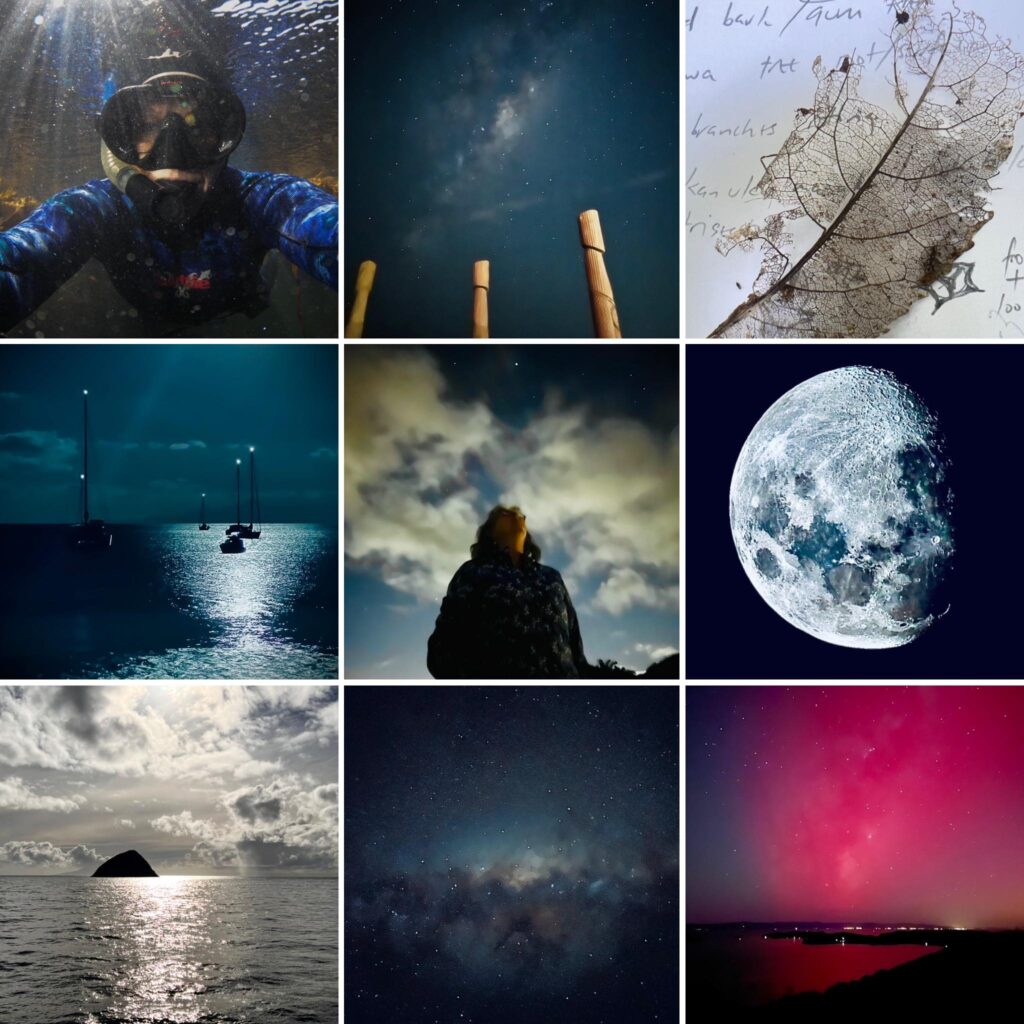
Oceanart is excited to be part this joint exhibition exploring outer space, ocean depth and the many wonders of our natural environment. 

KIM WESNEY focuses on contemporary landscapes in acrylic, photography,  installation and soundworks drawing inspiration from the natural environment, sounds and music. She works and exhibits regularly at the Waiheke Community Art Gallery and exhibits from her own studio and the NightShift Stargazing office.

Nat Primak is an astronomer with a PhD in radio astronomy. Nat has been observing space from around the world using optical, near infrared and radio telescopes and shares stunning perspectives of the sky and far flung galaxies with the audience. You can join Nat on one of the NightShift stargazing or astrophotography tours, too.

NICOLE MILLER has made the ocean the centre of her life. The award-winning documentary “Seaweed, A Love Story” narrates her work to protect Wellington’s kelp forests and bring the beauty of the marine world to the surface through film, art and storytelling.

Kim Wesney Studio Gallery

32 Mako St., Waiheke Island.
Open 11am-5pm
kimwesney.com
Follow Kim Wesney Studio on Facebook.

Ticket info Open Studios 2026

Get your ticket to over 50 artists and 30 studios and galleries. 18 NZD for the weekend, under 15yrs free: https://events.humanitix.com/open-studios-2026/tickets
Stargazing on Waiheke Island

Join Nat and Kim and experience Waiheke Island on a NightShift Stargazing Tour or to learn everything about astronomical observations, astrophotography and photography at night time. Follow NightShift Stargazing Waiheke on Facebook.

The seaweed forests of Waiheke and Wellington

Kelp forests are among the most important marine ecosystems in coastal waters. The rocky reefs of Aotearoa New Zealand sustain an astonishing marine biodiversity. Golden kelp (Ecklonia radiata) dominates the underwater forests in the north, while giant kelp towers over reefs in Wellington. Much like native forests on land, kelp forests provide shelter, nursery habitat, and food for thousands of marine species while helping stabilise coastlines, cycle nutrients, absorb carbon, and even produce oxygen.
 
In the Hauraki Gulf / Tīkapa Moana, as in many other parts of New Zealand, these underwater forests are increasingly under pressure from warming oceans, sedimentation, overfishing, and the spread of kina barrens. The decline of natural kina (sea urchin) predators such as large snapper and crayfish has allowed kina populations to expand unchecked in some areas, resulting in intense grazing of kelp forests and transforming once-thriving reefs into rocky underwater deserts.
 
The decline of kelp forests, along with the disappearance of previously common marine life and kaimoana, is being witnessed by local communities throughout Aotearoa. In response, hapū, iwi, divers, marine scientists, and local groups have begun working together to better understand the scale of the problem and explore pathways for restoration. Marine protection is a key part of rebuilding urchin predator populations and restoring resilient reef ecosystems, with measurable benefits for marine biodiversity and fish stocks in adjacent areas.
 
The work of the Waiheke Marine Project, Explore Your Coast, and initiatives such as community restoration days, marine monitoring, and education programmes help build a deeper understanding of the vital role underwater forests play in the health of coastal ecosystems. These initiatives also provide opportunities for communities to actively participate in marine science, restoration, and kaitiakitanga. Building stronger connections between people, the ocean, and the decisions we make on land is crucial to restoring healthier marine ecosystems for future generations.
 
Find out how you can get involved. Follow the Waiheke Marine Project (website, Facebook) and Explore Your Coast (website, Facebook), support local restoration initiatives, and connect with marine projects in your community!
 
Want to contribute by collecting observations of kina numbers anywhere in New Zealand? Check out the Great Urchin Count here: https://adventure360.co.nz/urchincount/